
What Is AI Reading? It Turns Out, Largely PR and Earned Media
Share this article:
As communicators, we’ve long understood the value of a good media hit: visibility, credibility, and influence with key audiences and decision makers. But a new study from Muck Rack and Generative Pulse confirms that the reach of earned media now extends beyond people. It’s influencing machines, too, and more specifically AI tools like ChatGPT and Claude that are increasingly replacing Google searches as a primary source of online research
By analyzing over 1 million links cited in AI-generated responses, the research asked a simple question: What is AI reading? The answer reinforces something many of us in PR have suspected – AI is paying close attention to journalism, earned media, and high-authority content. Here are three takeaways that caught our attention at WPR:
1. Journalism and Earned Media Are Now Fuel for AI
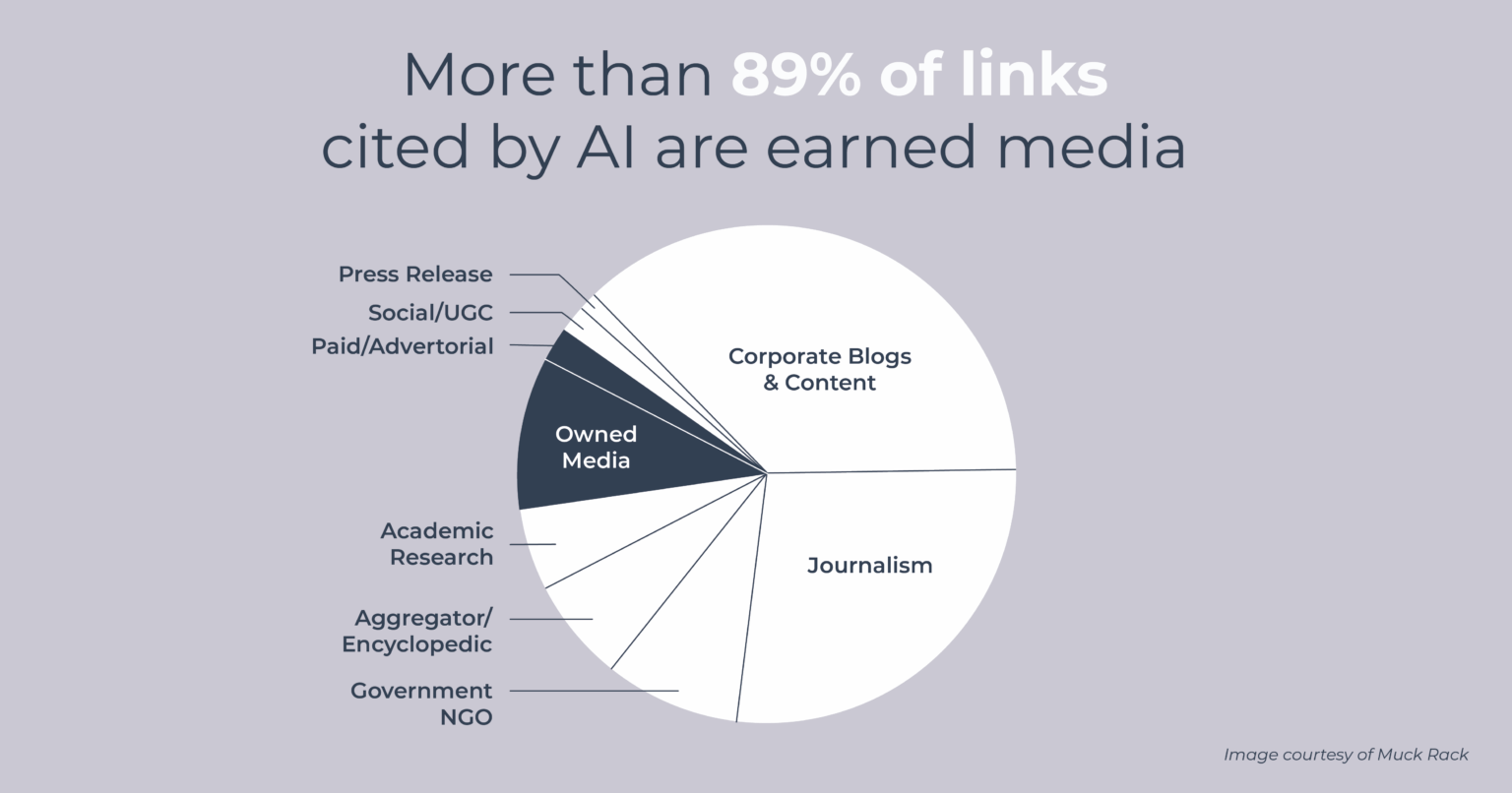
The study found that over 89% of links cited by generative AI come from earned media sources, and more than 27% of those links are journalistic. This means that a company’s ability to influence what AI models say is now directly tied to whether and how they show up in the media. It’s not just about impressing human readers anymore, AI is listening, too.
In a world where more people rely on tools like ChatGPT for product recommendations, business and personal research, and basic day-to-day decision-making, this adds a new layer of urgency to your media strategy.
2. Recency Wins (Especially With OpenAI)
Recency was another strong signal. Particularly in OpenAI’s models, fresh content is prioritized, especially related to events, opinions, and trends. AI is more likely to surface content that’s been recently published, meaning a consistent cadence of coverage is key to staying visible in this new AI-native search environment.
3. Authority Matters, But It’s Industry-Specific
High-domain authority outlets like Reuters, Axios, and Financial Times were among the most cited by generative AI models, but even those weren’t consistently cited across all use cases. In fact, only about 15% of sources appeared in the top 10 across multiple industries, according to the report’s analysis. This means industry-specific outlets and niche expertise matter just as much, if not more, in certain verticals.
It’s not just about aiming for the biggest names. It’s about understanding where your audience, and AI, go to learn about your category.
Why This Matters for Communications Teams
The game hasn’t changed – it’s just expanded. Where once we focused on reaching journalists and target audiences, we now need to think about how our stories influence AI-generated content. That means evolving our KPIs, doubling down on credible coverage, and thinking strategically about timing and placement.
At WPR, we’re closely tracking these trends and helping clients ensure their content not only resonates but also appears where it matters most, including in the algorithms that shape perception.