
Dodging Communications Traps and Mastering Your Message

Share this article:
When we’re at our best as communicators, we’re thinking strategically and speaking authentically. And when we fall short, we become social media fodder and our efforts land with a resounding THUD.
Our job at Weinstein PR is to help clients ask critical questions at the front end of a project so we can collaborate on a strategy that avoids common communications pitfalls. But when you’re in the heat of the moment and drafting a customer email, press release or employee memo, it can be easy to fall prey to these common mistakes.
1. Neglecting “What’s in it for me”
The key to messaging that resonates with people is creating a personal connection. Your audience is taking in the world through a “what’s in it for me?” (WIIFM) lens. Put yourself in their shoes and communicate not just the details, but also the specific end benefit to them. Your communication should show the user why they should care, whether through your product making their life easier, benefiting them and their community, etc.
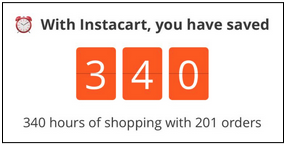
One of my favorite WIIFM examples is Instacart. Every time I use the app, it tells me how many total hours of shopping and traveling I’ve saved, making their $99 yearly membership fee seem like a bargain in comparison! That’s messaging that resonates with me as a busy parent.
2. Using acronyms and industry jargon
One of our trusted presentation partners, Dave Yewman of DASH Consulting, teaches a concept called “weekend language.” Essentially, it boils down to asking: How do you talk with friends and family around a BBQ? I’m willing to bet you use stories, metaphors and simple, everyday language to keep their attention. Once you start spouting cliche business terms like “optimization” and “bandwidth,” paired with industry jargon and acronyms, you’ve lost your audience. From the boardroom to the soccer field, you will rarely lose by using weekend language to convey your key concepts.
Another way to put this concept into practice? Write your marketing collateral and web copy at a middle-school reading level to make it more widely accessible. The Hemingway App is a great free tool to add simplicity to your writing.
3. Overlooking the visuals
Instagram, streaming services, YouTube-we live in a world overflowing with digital visuals. While humans have long been able to comprehend and retain visuals better than words, modern technology and our shifting attention span have recalibrated what constitutes compelling media.

This isn’t just a 21st century lesson. Take, for instance, the cover page of The New York Times. For almost 100 years the paper relied exclusively on the printed word-until the 1960s, when Louis Silverstein was appointed art director and the front page was transformed. This is yet another example of the lesson: If you want to tell a story that will truly stick, don’t skip the visuals.
4. Forgetting to message test
The more nuanced the communication, the greater the need for message testing. All of us routinely fall prey to the dreaded “work bubble” and the trappings of groupthink. The goal in message testing-be it large or small in scale-is to gauge how well your intended message resonates across audiences, and to find ways to make your approach even more clear, concise and engaging.
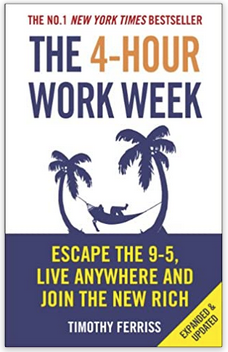
Author Tim Ferriss tells a story of trying to come up with a title for his first book on productivity and early retirement. He was leaning towards Broadband and White Sand, the kind of highbrow title that an editor applauds. But by A-B testing through digital ads-and even devising a bookstore experiment of mocking up two titles and placing them next to one another to see which version shoppers preferred- he landed on the now iconic The 4-Hour Work Week: Escape the 9-5, Live Anywhere and Join the New Rich.
5. Not bringing in another set of editing eyes
Many great marketing campaigns and all-company emails have been foiled by a typo or grammatical error. Proofreaders can save strategic communications from a major flop.
Don’t have a trusted copy editor to look over your work? New AI tools can be an effective second set of eyes. Just be sure to scrutinize the results, especially when it comes to fact-checking content and editorial intent.
And remember: The more time you’ve spent with something, the less likely you will be to catch a mistake. A second reviewer can make all the difference.
You’re bound to make mistakes … we all do! But hopefully this checklist gives you a solid roadmap to think through your next communications campaign. Or better yet, drop us a line. We would love to hear more about your project and share how we can help.